
Making History Through Belief
Foucault's PendulumThe novel distinguishes a fictitious theory from its real effects, showing how shared belief can turn invention into a historical force.
increasing Bearing strength in each event
 decreasing
Bearing strength in each eventdecreasingInventing a History

A Fictional Construction
Selective evidence
Casaubon, Belbo, and Diotallevi rearrange documents and popular claims into an account of hidden orders. Their method is openly imaginative at first.
A persuasive form
Because they reuse familiar stories and details, the Plan appears to have historical depth. Its plausibility comes from composition rather than verification.
The Believers Act
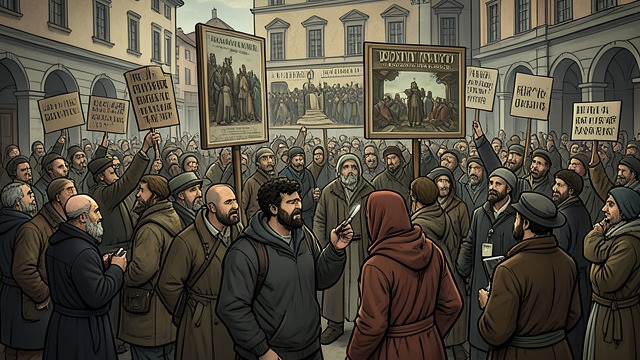
Fiction Enters the World
Identification
Different groups recognize their own beliefs in the Plan and accept it as an account of their history. They add their interests to its existing structure.
Real consequences
Once people act on the fiction, its effects cease to be imaginary. The invented conspiracy helps create the conflict it claims merely to describe.
The Authors Lose Control

Responsibility Without Mastery
No single author
Casaubon recognizes that no one controls all the groups interpreting the Plan. Its spread exceeds the intentions of its creators.
A moral problem
The invention remains fictional in origin but real in consequence. The novel asks whether those who create a dangerous story can disclaim responsibility once others believe it.
During Project Hermes
After the Plan circulates among occult groups
At the novel's ending
